If you need to use a vehicle to support your business, then getting the right one will always make the job a lot quicker and easier. And one of the biggest benefits of hiring a business vehicle is that you can find the right one for the job, every single time.
But some specialist vehicle swaps are more obvious than others. While you wouldn’t hire a small hatchback to transport large objects, you also probably would not consider how much extra space a dropside tipper can afford you over a panel van.
Here at Paulls, we want to make sure you always have access to the best vehicle for the task you’re doing. So we’ve put together this guide to commercial specialist vehicles to help you understand what is available and identify the best vehicle for you.
Is a commercial vehicle right for you?
Before you get stuck into weighing which commercial vehicle is best for you, you should consider whether any commercial vehicle is needed. After all, there are many jobs where the most suitable vehicle is simply a car.
But if you’re looking to transport big, bulky or heavy loads, then commercial van hire is almost certainly going to be the best option available to you. Once this is decided, all you need to identify is which type of commercial vehicle is right for you.
What Are Specialist Commercial Vehicles?
A commercial specialist vehicle is one that is a type of commercial vehicle that is designed with a specific task or job in mind.
These vehicles will have inbuilt features that make that task easier, quicker or safer to complete – often a combination of all three. In turn, they may not be the most multi-functional option so if you’re looking to complete a range of jobs at once they may not be the right choice. But if you’re doing the task they’re made to support, you’ll definitely want to explore them as a possibility.
Types of Commercial Vehicles
As specialist commercial vehicles can be so task-specific, they’re not always the most appropriate vehicles for a job. Here are other light commercial vehicles (LCVs) you might choose to use for transporting goods or other more general tasks.
Panel Vans
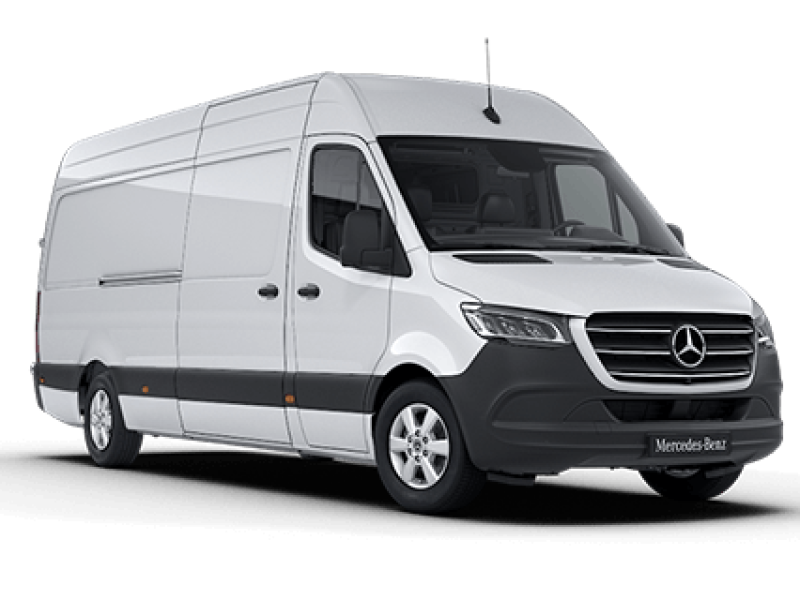
The most common type of commercial van is a panel van. A panel van has a fixed cab at the front of the vehicle and cargo area at the rear – this can be all in one space or have a ‘bulkhead’ fitted to separate the areas off for safety.
Panel vans come in a range of sizes, short wheelbase to long wheelbase vans, which give you the option to find a van that suits your needs. They are usually quite easy to drive, with small vans having almost the same manoeuvrability as a car.
Box Vans
In a box van, the load is built as a separate, enclosed compartment mounted on the vehicle chassis. The name comes from this self-contained ‘box’ compartment, which has straight sides and a flat roof.
The main benefit of a box van is the high capacity they offer. They are usually bigger than other commercial vans, and the entire cargo space is completely flat and usable. The fully enclosed body keeps goods safe from the weather, and this type of van is usually easy to access through large rear doors and sometimes a tail lift.
Box vans are the perfect choice for moving bulky, large or fragile loads such as moving furniture or transporting goods in bulk.
Luton vans
Luton vans are a particular type of box van where the self-contained ‘box’ of the van extends up and over the cab of the van. This increases its load capacity without making the van excessively long and hard to handle.
One restriction is that this extra space can only take lighter items. You would not be able to store heavy or big items up there, as they would not be secure.
Luton vans are popular with moving companies, where items of varying sizes are being transported, as well as furniture delivery. They’re also a great choice for event and exhibition services when displays and staging materials need transporting.

Crew Cab Vans
A crew cab van (also known as a double cab van) is a large van with a second row of passenger seats behind the driver. It gives extra space to transport big or heavy loads, while also having space to seat more passengers.
They are most commonly used when businesses need to transport people AND equipment together. This makes them popular for use in construction and trade teams, events, catering services and utility or maintenance companies.
Car Derived Vans
At the other end of the scale to a large van is a car-derived van (CDV). This type of van is based on the same body and chassis as a standard passenger car, but the back is converted into a small cargo area with a flat load floor.
As they are based on a car body, CDV’s are highly manoeuvrable, easy to drive and park, and have better fuel economy than larger vans. However, their load space is highly limited, making them a relatively unpopular choice when it comes to business hire.
They are most commonly used for small business purposes, such as tradespeople who carry light tools and equipment, or urban couriers and delivery drivers who need a nimble vehicle for complicated city delivery routes.
Types of Specialist Commercial Vehicles
Sometimes, the best vehicle option is the most versatile. But in some cases, a specialist commercial vehicle will make a task infinitely easier or quicker. Here is the rundown on some of the most commonly used specialist vehicles to help you decide which would be most helpful for you to hire.
PickUp Truck
Pickup trucks have an enclosure at the front and an open load bed behind. The cab size can vary from two seats to five seats, and similarly, from two to four doors, depending on the seat layout.
They’re very versatile as far as commercial vehicles go, and are usually able to take rougher terrain than other types. They can be used for towing while also having significant space for carrying a load as well.
While they aren’t as comfortable as your typical passenger vehicle, they’re more comfortable than most commercial vehicles. They also handle better than other specialised vehicles making them a great choice for longer distances with multiple passengers.
The main disadvantage of a pickup truck is the same as a dropside or tipper van – there’s no cover for cargo in the flatbed. This leaves your goods exposed to the weather, and also means you must tether your load securely to keep it safe.
It also creates a security risk for items that are relatively light or easier to move, such as tools. If you’re looking for a commercial vehicle to transport this type of item, a covered van or box truck would likely be a better choice.
Pickup trucks also tend to have a slightly lower weight limit for cargo. If you’re moving big, bulky, but not heavy, items, then a pickup truck is a great choice, but for something like moving construction supplies, you would be better with a stronger flatbed like a dropside.

Tipper Van
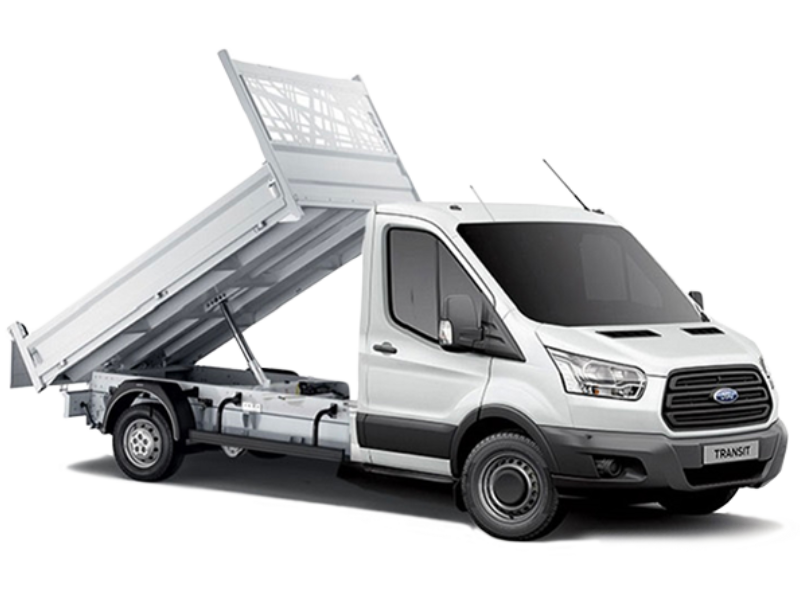
A tipper van is a type of flatbed truck, but the flatbed pivots upwards for easier unloading.
They are particularly useful for transporting and delivering large amounts of loose landscaping materials like dirt, gravel, or sand, as it can be so quickly unloaded – just tipped out. They are relatively easy to use and, thanks to their self-contained loading method, they can be operated by fewer people – a great way to save labour costs and remove the need for multiple people to help with the unloading process.
One of the biggest drawbacks to a tipper van is the space it needs. You need enough space for the van to go, but also plenty of space for the load to land as well. Also, their ability to lift heavy loads causes increased wear and tear and creates an increased risk of rolling over if not handled correctly.
When it comes to the job they are designed for, a tipper van is unquestionably the correct choice, but the least flexible choice when it comes to specialised vehicles, and not one to choose ‘just in case’.
Dropside Van
A dropside van is a light commercial vehicle commonly used in the construction industry. They are another type of flatbed truck that has hinged boards along the back and/or sides that can be lowered to offer easier unloading of their cargo. With a dropside truck forklifts, mobile cranes and other machinery can easily access the load to remove it, without needing to lift it even higher.
This makes it a very popular choice for transporting particularly bulky or heavy loads – for example, construction supplies like bricks that are transported on pallets, or even furniture that is on a pallet.
There are some disadvantages to picking a dropside van. The cargo space is completely uncovered, which leaves any items you transport exposed to the elements. In the UK, this can be particularly problematic, as anything that can’t get wet will need to be covered in a waterproof membrane.
While dropside vans are not as difficult to drive as articulated lorries, they are also not as manoeuvrable as pickup trucks are, which is another drawback if you need to travel longer distances in your commercial vehicle.
Refrigerated Trucks
This type of commercial vehicle is so specialist that most businesses that use them will buy them outright. A specialised vehicle that includes an inbuilt refrigeration unit, these vans are popular for businesses in the food industry, including delivery and catering.
The advantages and disadvantages of these vehicles are clearly tied to their purpose. If you need to transport items that need to be kept at a certain temperature, they are the clear choice, but otherwise unnecessary.
Picking the right commercial specialist vehicle for you
We all know how important it is to get the right tools for the job – and with vehicle hire that statement is wholeheartedly true. Hiring the right vehicle can reduce the necessary labour and costs, to make things go as smoothly and quickly as possible.
Hopefully, our guide will have helped you spot which is the right vehicle for your business. However, if you’re still unsure which business hire vehicle is right for you, our team is happy to answer any questions you may have. Or if you’re fully decided, you can book online today to make sure you have access to everything you need to get the job done.
